Only a small fraction of neurons are identified as domain-specific in the reported analysis.
Interpretability · EMNLP 2024 Main
MMNeuron
Discovering neuron-level, domain-specific mechanisms inside multimodal language models.
1 The Hong Kong University of Science and Technology (Guangzhou) · 2 The Hong Kong University of Science and Technology · 3 Tongji University
Project overview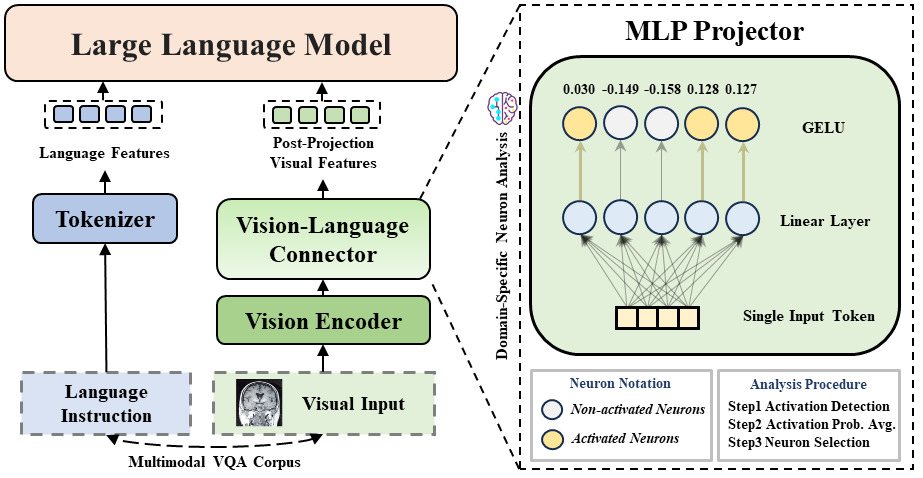
MMNeuron traces how multimodal information travels through domain-specific neurons in an MLLM.
Motivation
Domain competence should be traced to internal computational mechanisms.
Aggregate benchmark scores reveal what a multimodal model can do, but not where specialized visual knowledge is represented or whether identified components have a causal role.
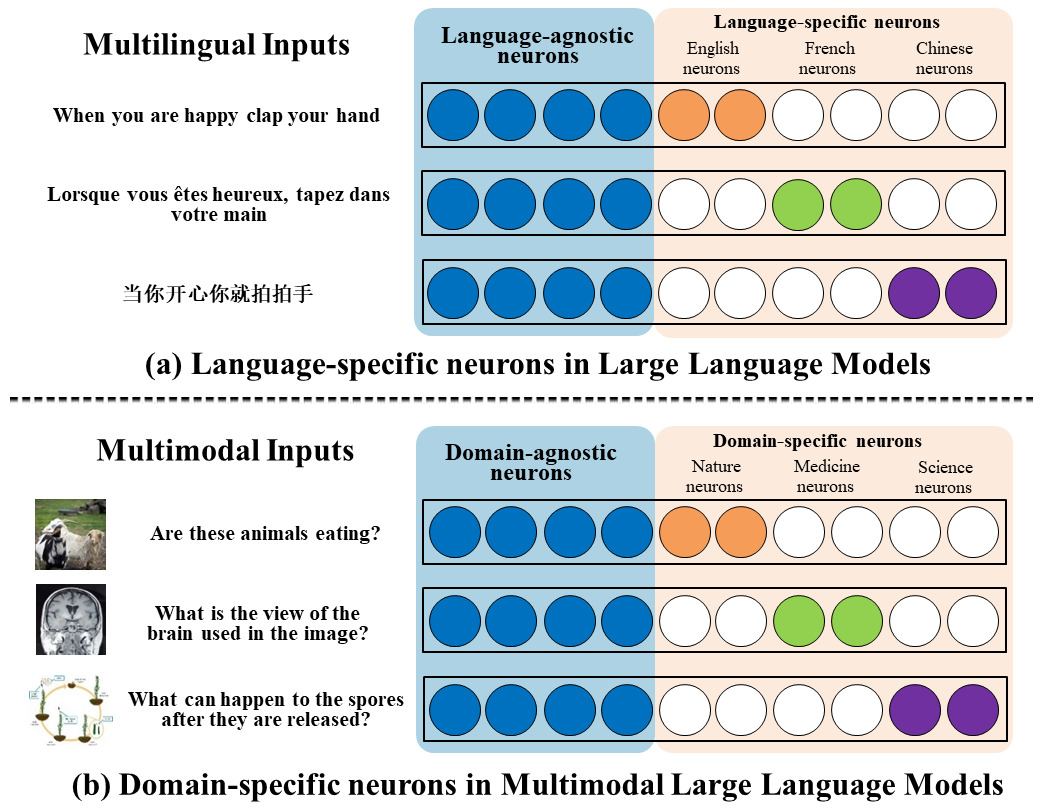
Multimodal large language models operate across heterogeneous domains such as documents, medicine, commerce, advertising, and remote sensing. Existing interpretability analyses commonly describe attention patterns or global representations, leaving the neuron-level organization of domain-specific behavior insufficiently characterized.
MMNeuron studies whether a sparse subset of neurons consistently distinguishes individual domains, how those neurons influence intermediate predictions, and whether intervening on them changes downstream accuracy. The analysis connects activation statistics, layer-wise mechanisms, and controlled interventions within one framework.
Main findings
Evidence for sparse domain specialization
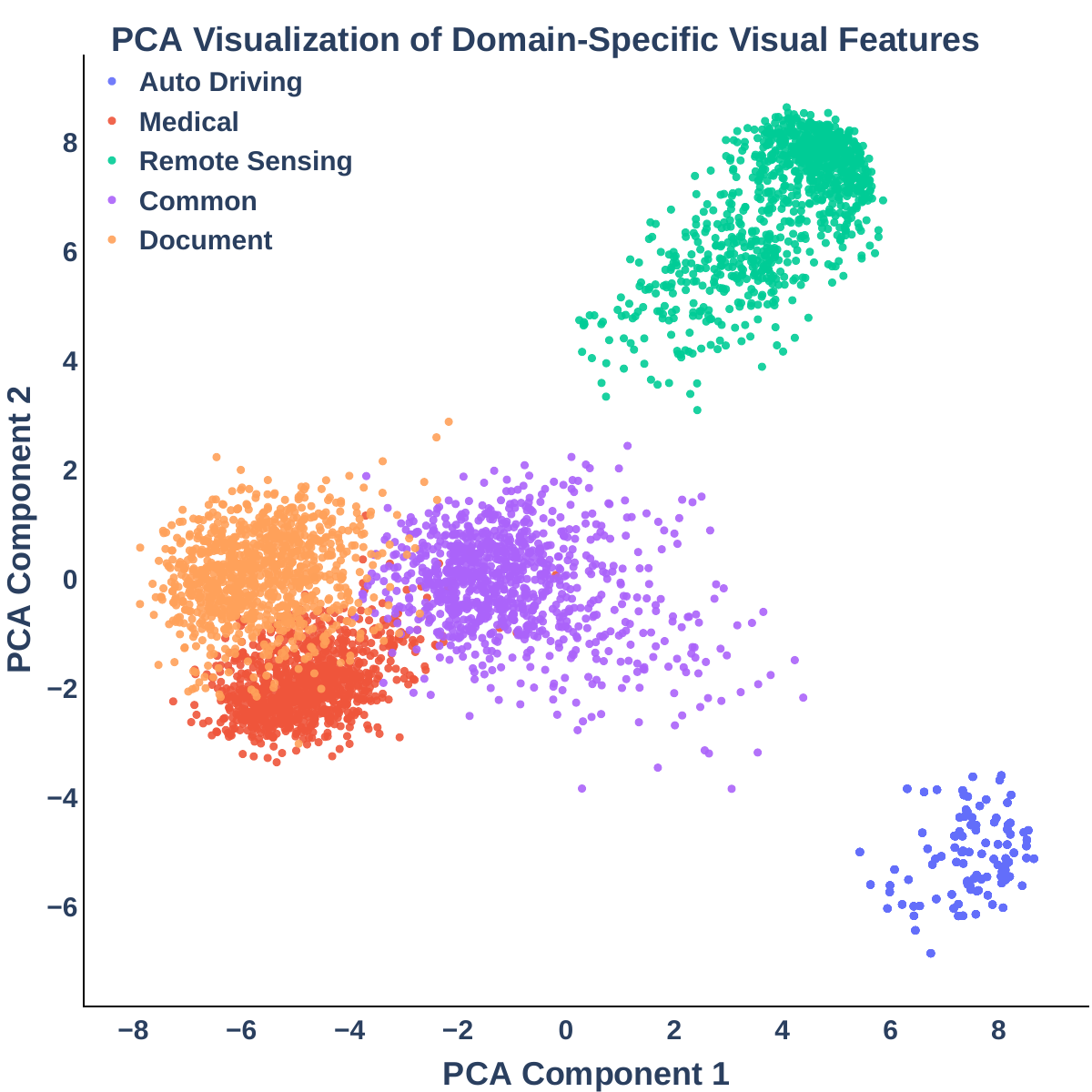
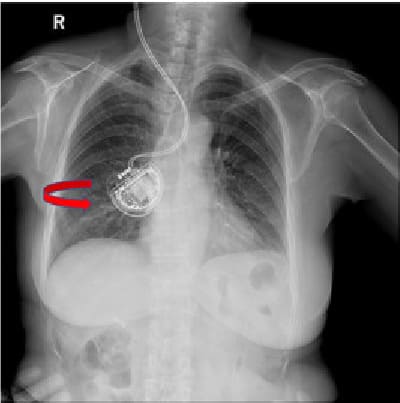
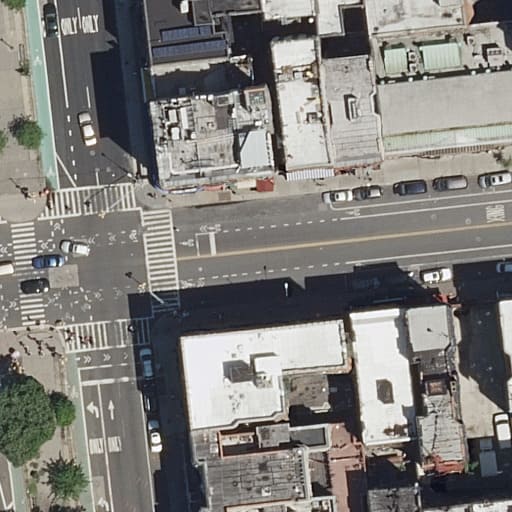
Specialized behavior is studied across document, medical, commerce, advertising, and remote-sensing examples.
Reported accuracy can change by up to this amount when domain-specific neurons are manipulated.
Methodology
Identification, interpretation, and intervention
The framework moves from statistical discovery to mechanistic analysis and finally to causal validation.
Domain-specific neuron identification
Activation statistics are collected for examples from five visual domains. Neurons with consistently selective responses are identified by contrasting within-domain activation against the remaining domains across model layers.
Layer-wise mechanism analysis
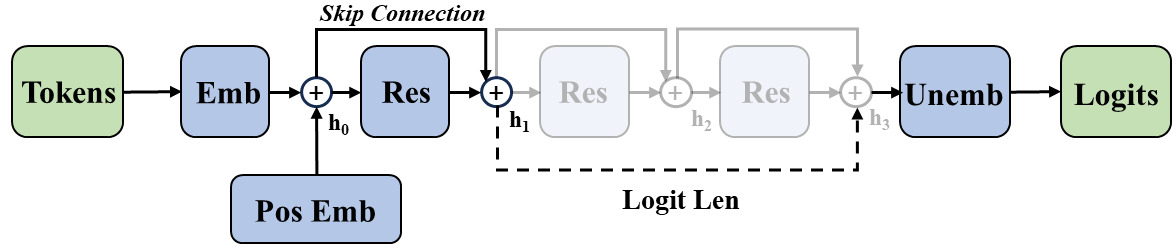
The discovered neurons are organized into a three-stage processing account. Logit-lens projections map intermediate activations into the output vocabulary, revealing how domain evidence emerges and propagates toward task predictions.
Causal intervention
Selected neuron activations are enhanced or suppressed during inference. Measuring domain-specific accuracy before and after intervention tests whether the neurons contribute functionally to behavior rather than merely correlate with it.
Visual results
Mechanistic analysis across domains
From model anatomy to domain examples, the figures make an internal phenomenon concrete.


Citation
BibTeX
@inproceedings{huo2024mmneuron,
  title     = {MMNeuron: Discovering Neuron-Level Domain-Specific Interpretation in Multimodal Large Language Model},
  author    = {Huo, Jiahao and Yan, Yibo and Hu, Boren and Yue, Yutao and Hu, Xuming},
  booktitle = {Proceedings of EMNLP},
  year      = {2024}
}